Emergency Dentist Advice for Post-Procedure Pain That Feels Abnormal

Most dental procedures come with some degree of soreness. That part is expected. A filling can leave a tooth tender for a few days. A crown prep can make the gums feel bruised. An extraction can throb, especially after the numbing medicine wears off. What unsettles people is not pain itself, but pain that seems out of proportion to what they were told to expect.
That distinction matters.
Patients often call an Emergency Dentist because they are trying to answer a very practical question: is this normal healing, or is something going wrong? The answer depends on timing, intensity, location, and the type of procedure you had. It also depends on what the pain is doing. Steadily improving discomfort is very different from pain that spikes on day three, wakes you from sleep, or seems to radiate into the ear, temple, or jaw joint.
I have seen the same pattern many times. Someone assumes they should “tough it out” because they do not want to overreact. They wait through a weekend with a pain level that is no longer ordinary healing. By the time they come in, the issue is more inflamed, more expensive, and harder to settle quickly. On the other side, I have also seen people panic over symptoms that sound dramatic but are common and temporary, like temperature sensitivity after a new filling or pressure tenderness after a crown adjustment.
The goal is not to turn every ache into an emergency. It is to recognize when abnormal post-procedure pain deserves urgent attention.
What normal healing usually feels like
After dental work, tissues react in predictable ways. The gums may swell slightly where instruments or retraction cords touched them. The tooth’s ligament can feel bruised after a bite has been changed or after a tooth has been manipulated. If you had an extraction, the socket can ache for several days, especially when talking, chewing, or rinsing too aggressively. If you had a root canal, it is common to feel soreness when biting for a few days because the area around the root has been inflamed.
Normal pain tends to have a pattern. It is noticeable but manageable. It usually responds to the medications your dentist recommended. It tends to peak within the first day or two and then gradually ease. You may still notice it for a week, sometimes longer after a more involved procedure, but the trend should be toward improvement.
The phrase I often use with patients is “annoying but explainable.” A little tenderness to cold after a filling can be explainable. Mild jaw soreness from holding your mouth open for a long appointment can be explainable. A socket that feels sore but not dramatically worse on day two can be explainable. Healing is not always comfortable, but it usually follows a curve that makes sense.
Abnormal pain breaks that curve.
When pain stops looking routine
Pain deserves a second look when it becomes sharper, more constant, or more disruptive than the procedure would suggest. If you had a simple filling and cannot chew on that side at all four days later, something may be off. If your swelling is increasing instead of decreasing, that matters. If the area tastes foul, drains fluid, or feels hot and tight, that matters even more.
Timing can be revealing. Severe pain that appears after an initially calm first day is often more concerning than soreness that begins immediately after treatment. Dry socket is a classic example after an extraction. Many people feel reasonably sore at first, then get a sudden deep, intense pain around day two to five, often with bad breath or a bad taste. That is not a subtle symptom. Patients usually know something has shifted.
The character of pain is just as important. A dull ache is different from electric, stabbing, pulsing, or pressure pain. Throbbing that synchronizes with your heartbeat can suggest active inflammation. Pain triggered sharply by biting can mean a tooth is hitting high, a crack is present, or the ligament around the tooth is irritated. Lingering pain to heat can point toward an inflamed nerve. Pain that radiates broadly through the jaw can sometimes be dental, but it can also involve the joint, muscles, or an infection spreading in the tissues around the tooth.
An Emergency Dentist listens for these nuances because they change the urgency and the likely cause.
The procedures that most often cause confusion
Some types of treatment create more uncertainty than others. Fillings are a common one. A patient gets a filling, the numbness fades, and now the tooth feels “off.” Sometimes the bite is simply a little too high, which can make the tooth sore with every chew. It does not take much. A restoration that is high by a fraction of a millimeter can keep that tooth from resting normally, and by the end of the day it feels as if something is seriously wrong. The fix can be simple, but the pain can feel surprisingly intense.
Crowns and onlays create their own version of this. The tooth may feel pressure-sensitive because it has been shaped, scanned, bonded, and tested repeatedly in one visit. Some patients also clench more when a new restoration feels unfamiliar. A tiny bite discrepancy https://www.google.com/maps?cid=9042865669086661852 plus nighttime clenching can produce a lot of soreness within 24 to 48 hours.
Root canals confuse people because they are done to remove pain, yet the area may still hurt afterward. That does not always mean failure. If the tooth was badly infected or you had swelling before treatment, the tissues around the root may need time to settle. The concern rises when pain escalates instead of tapers, especially if swelling returns, fever develops, or the tooth feels as though it is being pushed out of the socket.
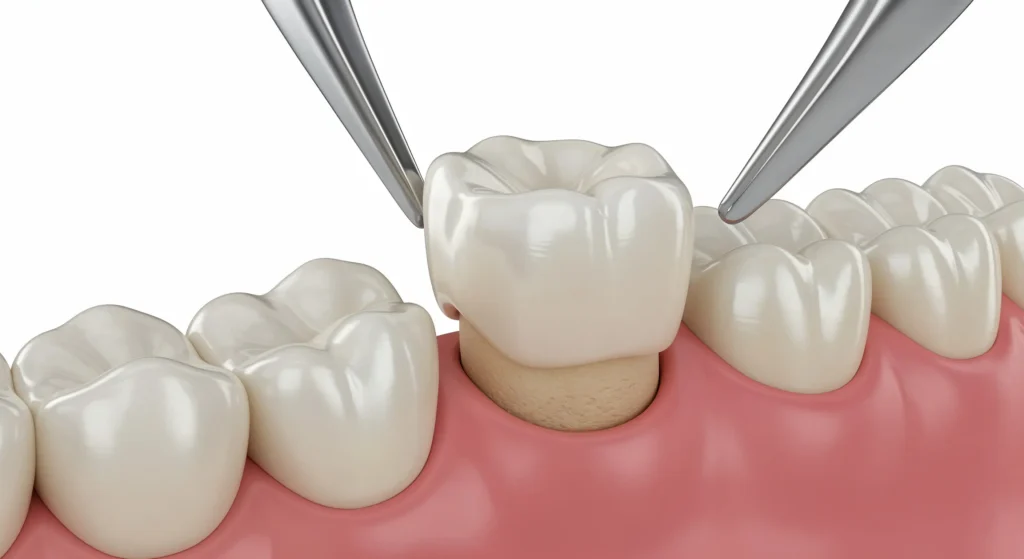
Extractions carry perhaps the widest range of normal versus abnormal healing. Mild bleeding early on, gum soreness, and tenderness when opening wide can be routine. Severe deep pain after initial improvement is not. Neither is swelling that progresses significantly after the first couple of days, difficulty swallowing, or trouble opening the mouth.
Red flags that call for urgent attention
If any of the following are present, it is wise to contact your dentist promptly, and in some cases seek same-day care from an Emergency Dentist:
- Pain that is worsening after 48 hours instead of gradually improving.
- Swelling that is increasing, especially if it affects the face, eye area, swallowing, or breathing.
- Fever, chills, foul-tasting drainage, or a strong bad odor from the treatment site.
- Bleeding that does not slow with pressure, or a socket that begins severe throbbing pain a few days after extraction.
- A bite that feels sharply “too high,” making the tooth painful every time it contacts.
That list is short by design. Not every urgent problem looks dramatic, but these patterns consistently deserve attention.
Why abnormal pain happens
People often assume post-procedure pain means the treatment was done poorly. Sometimes that is true, but often it is not that simple. Dental pain is shaped by anatomy, preexisting infection, bite forces, nerve sensitivity, and healing behavior. Two patients can have the same procedure and have completely different recoveries.
One common cause is an occlusion issue, meaning the bite no longer meets evenly. This is especially common after fillings, crowns, and temporary restorations. Teeth are suspended by tiny ligaments that detect pressure with remarkable precision. Even a slight excess on a new restoration can overstress that ligament. Patients describe it as “that tooth feels tall” or “it hurts only when I bite down in one spot.”
Another cause is pulpal inflammation. A tooth that already had deep decay, old trauma, or repeated dental work may react strongly even when the procedure itself went smoothly. The nerve can become inflamed enough to produce lingering cold sensitivity, spontaneous aching, or heat pain. Sometimes this settles. Sometimes the tooth progresses to needing root canal treatment.
There is also infection. If bacteria were already present deep in the tooth or gum, treatment may uncover the true extent of the problem rather than create it. A tooth that looked restorable may have had a crack or infection extending farther than imaging suggested. In those cases, the post-procedure pain is not random, it is a clue that the underlying problem is more complex.
Then there are extraction-related issues. Dry socket happens when the protective blood clot is lost too early, exposing bone and nerve endings. It is intensely painful, often more painful than the extraction itself. Food impaction can also mimic something more serious if debris gets trapped and irritates the area, especially around wisdom teeth.
What to do in the first few hours
The period between noticing abnormal pain and getting professional advice matters. People often make the area angrier by probing it, chewing on it “to test it,” or applying aspirin directly to the gum, which can cause a chemical burn.
A more useful response looks like this:
- Stop chewing on that side and switch to soft, lukewarm foods.
- Take medications exactly as directed by your dentist or as labeled, if you were told over-the-counter options were appropriate for you.
- Use a cold compress on the outside of the face in short intervals if there is swelling.
- Rinse gently with salt water only if your dentist has said rinsing is appropriate for your procedure.
- Call the office and describe the pain by timing, trigger, severity, and whether swelling or fever is present.
That last point makes a real difference. “It hurts a lot” is understandable but not very actionable. “It was manageable yesterday, now it is throbbing at an 8 out of 10, the cheek is swelling, and ibuprofen is not touching it” tells the team this may need urgent evaluation.
The details your dentist wants to hear
When a patient calls, the best conversations are specific. Good triage depends on accurate description. If you can, note when the pain started, whether it is spontaneous or only provoked, and what seems to trigger it. Cold? Heat? Biting? Lying down? Opening wide? These are not small details. They point toward different causes.
For example, a tooth that only hurts when biting on a new crown often suggests a bite adjustment is needed. A tooth that throbs on its own and stays painful after hot drinks may point more toward nerve inflammation. A socket that had been tolerable but becomes severe on day three fits the pattern of dry socket. A face that becomes visibly swollen over several hours raises concern for active infection and tissue involvement.
If you have a medical condition that affects healing, mention it. Diabetes, immune suppression, recent steroid use, and certain bone medications all influence urgency and treatment choices. So does smoking, especially after extractions. Nicotine reduces blood flow and increases the risk of dry socket and delayed healing, even in otherwise healthy patients.
Temporary steps that help, and common mistakes that do not
There is a large gap between “manage symptoms for a few hours” and “try to self-treat.” Temporary comfort measures have a place. Self-diagnosis usually does not.
Cold compresses can help external swelling in the first day or so. Keeping your head elevated can reduce throbbing at night. Soft foods reduce repeated trauma. Taking pain medication on schedule, rather than waiting until discomfort becomes severe, often gives better control. These are reasonable short-term measures.
What often backfires is heat applied too early to a swollen face, aggressive rinsing after an extraction, smoking because “just one won’t matter,” or repeatedly touching the site with your tongue or fingers. I have seen patients dislodge healing tissue by checking the area every hour in the mirror. The body rarely improves because it is being inspected more.
One memorable case involved a patient who had a routine extraction and felt moderate soreness for the first day. By day three, he had severe throbbing pain radiating to the ear. He assumed food was stuck, so he used a water flosser on the site at high pressure. That turned a likely dry socket into a much angrier wound. The eventual treatment was still manageable, but the extra trauma bought him several more days of pain.
When same-day care is the right move
There are times when waiting for a callback is not wise. Rapid swelling, fever, difficulty swallowing, difficulty breathing, or inability to open the mouth normally can signal a spreading infection. Those symptoms deserve immediate attention. Dental infections are usually localized, but when they spread into deeper facial spaces, they can become serious fast.
Severe bleeding is another same-day issue. Oozing after an extraction is common. Bright red bleeding that saturates gauze repeatedly and does not respond to firm pressure is not something to watch casually for hours.
Trauma after a procedure matters too. If a temporary crown comes off and the underlying tooth is painfully exposed, or if you crack a newly treated tooth while chewing, the repair may be much easier if seen promptly. Time can preserve options.
This is where an Emergency Dentist plays a practical role. Emergency care is not only for dramatic infections or knocked-out teeth. It is also for timely intervention that prevents escalation, such as relieving a high bite, dressing a dry socket, draining an abscess, recementing a lost provisional, or deciding whether a tooth needs endodontic treatment sooner rather than later.
What treatment may look like once you are seen
Patients often fear that if they return with pain, they are headed for another major procedure. Sometimes the solution is minor. A bite adjustment can take minutes and completely change the pressure pattern on a tooth. A dry socket dressing can sharply reduce pain even though full healing still takes time. Flushing trapped debris from around a surgical site can make a dramatic difference.
Other times, the visit is more diagnostic. Your dentist may take new radiographs, test the nerve response of the tooth, check for cracks, or assess whether the pain is actually muscular or sinus-related rather than strictly dental. That distinction matters because not every post-procedure pain originates in the treated tooth.
If infection is present, treatment might involve drainage, cleaning the area, adjusting the original plan, or prescribing medication where appropriate. If the tooth’s nerve has become irreversibly inflamed after a filling or crown, root canal treatment may now be the appropriate next step. That is disappointing, but not unusual in teeth that were already compromised before the first procedure.
The important point is that abnormal pain is often treatable once the cause is identified. Lingering through it without evaluation rarely improves the odds.
How to judge pain at home without overreacting
A simple rule helps. Ask whether the pain is predictable and improving, or unpredictable and intensifying. Predictable, improving pain usually fits healing. Unpredictable, intensifying pain deserves attention.
Also ask how much the pain is changing your behavior. Are you avoiding all chewing on that side? Waking at night? Taking far more medication than expected? Cancelling work because the discomfort is too distracting to function? Those are not trivial markers. Functional disruption is often a better gauge than pain vocabulary alone.
Parents face an extra challenge after a child’s dental procedure because children may describe all discomfort as “it hurts really bad.” In those cases, behavior tells the story. Is the child drinking, speaking, and settling with standard pain relief, or are they refusing fluids, crying inconsolably, developing swelling, or becoming lethargic? The second pattern warrants faster contact with the dentist.
Reducing the risk before it starts
Some postoperative pain problems are unavoidable, but many can be minimized with good planning and follow-through. A careful bite check after restorative work matters. So do clear postoperative instructions, especially after extractions. Patients who understand what is normal are less likely to delay when something is not.
If you grind or clench, mention it before treatment. A new crown on a heavy clencher may need a more cautious bite adjustment and sometimes a night guard discussion. If you have had dry socket before, tell your dentist. If you are a smoker, the first few days after an extraction are the wrong time to assume habit will not matter. If the office gives you instructions about not spitting, not using straws, or rinsing gently, there is a reason behind each one.
Pain management plans should also be realistic. For some procedures, staggered use of common over-the-counter medications may be enough if medically appropriate for you. For others, especially when infection or surgical difficulty is involved, closer follow-up may be smart. Good dentistry includes anticipating who is more likely to call in trouble.
Trust the pattern, not just your pain tolerance
Some people minimize symptoms because they have a high pain threshold. Others seek help early because dental pain makes them anxious, even when the issue is mild. Neither personality trait reliably predicts what is happening biologically.
What matters is the pattern. Pain that steadily calms down is usually healing. Pain that escalates, spreads, throbs harder, or brings swelling, fever, or functional problems deserves evaluation. If you are unsure, contact the office anyway. A good dental team would rather sort out a false alarm than have a patient sit on a genuine complication for three unnecessary days.
Abnormal post-procedure pain is not always dramatic, but it is usually informative. The body tends to signal when pressure is wrong, inflammation is escalating, or healing has been interrupted. Listening early, and getting the right eyes on it, often turns a bad weekend into a manageable appointment. That is exactly the kind of moment when an Emergency Dentist is not an overreaction, but the sensible next step.
Simple Dental Vermont
Address: 8914 S Vermont Ave, Los Angeles, CA 90044
Phone number: +13239493000
FAQ About Emergency Dentist Los Angeles CA
What can the ER do for a tooth?
The emergency room can provide temporary symptom relief for a bad tooth, such as prescribing pain medicine or antibiotics, but it cannot fix the actual dental problem.
What is the 3-3-3 rule for tooth infection?
The 3-3-3 rule for a toothache or infection typically means taking three 200 mg ibuprofen tablets (600 mg total) three times a day for no more than three days to control pain and swelling while waiting to see a dentist.
What do you do if you have a dental emergency but no dentist?
If you have a dental emergency and no regular dentist, you should search for an urgent care dental clinic, call local walk-in dental offices, or go to a hospital emergency room if you have severe bleeding, swelling, or trouble breathing.